Saturday, 18 November 2017

Disorderly behaviour charge equals a raised voice

This from guest blogger 'Anne Hunt'

Phil Taueki

At Lake Horowhenua, Phil Taueki's two-year respite from arrest came to an abrupt halt last Tuesday, only four days after we celebrated this welcome reprieve.

Shortly after 9am, I received a phone call from Phil to report that Horizons and NIWA were launching a particularly large boat on this culturally-sensitive lake and he was going to call the police. Could I come over, he asked.

As I was driving down Queen Street towards the lake, I saw a police car driving towards me and sure enough, Phil was in the back seat. After waiting at the police station for some time, the police eventually told me that he would not be released until the afternoon.

So I went down to the lake, where I was soon joined by several beneficial owners and supporters. A security guard employed by First Security ordered an owner to get off the property. When he also told me to leave, I questioned his authority. Horizons, he claimed.

As the hours passed, we managed to confirm that a scuba diver was gathering the endangered species, kakahi from the bed of this privately-owned lake.

When the police returned to the lake to conduct interviews, I was informed that the police had arrested Phil on a disorderly behaviour charge because he had raised his voice. They refused to take several evidential photographs requested because they did not consider them to be relevant to this charge.

Fortunately, we already had taken photographs to show that the concrete pad of the wash-down facility was dry. The boat, eighteen feet in length, was powered by a 150 hp motor.

To comply with bio-security regulations, boats must be thoroughly washed down. By-laws approved by the Minister of Conservation require anybody using a motorised boat to obtain a permit from the Lake Domain Board beforehand. The police have powers to interfere with any unauthorised activity. The fine for non-compliance is $5,000.

When Phil was eventually freed, he was not offered a ride home.

He tells me that as soon as he had approached this boat on his own land, a security guard ordered him to get off the property. When the police turned up, they refused to check whether Horizons had a permit to operate a motorised boat. When Phil raised his voice, he was immediately handcuffed and hauled off to the police station on a disorderly behaviour charge.

He was released on bail conditions not to approach Horizons and NIWA staff. They were back on the lake the very next day, knowing Phil would be detained in custody if he went anywhere near them.

As Phil has already successfully defended this charge, he plans to recycle a comprehensive submission prepared by Steven Price, who is also Nicky Hager’s lawyer.
The Chief Justice warns against the danger of using this disorderly behaviour as a tool to control “unwelcome speech”, because it impacts on liberty and freedom of speech.
If ‘objecting vociferously’ to unlawful conduct is a crime, we all have reason be worried.
Guest blog ends:
My view is that there is something deeply amiss in the town of Levin where the police seem to be so over staffed and spend little time solving real crime, I mean seriously Phil Taueki isn't even a gang member.  But looks like the Horowhenua Levin Police are going to reach a tally of 35 charges dismissed, withdrawn or quashed on appeal. When will the police ever learn????

To contact Anne Hunt go to:
annehunt@inspire.net.nz

To download Anne Hunt’s latest book, Man of CONVICTIONS go to :  www.annehunt.co.nz 
 
References:
http://wheelerscornernz.blogspot.co.nz/2013/08/anne-hunt-speaks-out-for-justice.html

http://wheelerscornernz.blogspot.co.nz/2016/06/bite-bullet-and-get-back-to-work.html 

Saturday, 11 November 2017

Its Our Future Manawatu leads the way.

The PNCC voted to introduce Maori Wards in an enlightened and progressive move to introduce a fairer and more inclusive way of ensuring balanced and across the board representation to Palmerston North’s growing population. Ten Councillors' and the Mayor voted for the progressive change. Those shown with a cross voted against and the one Councillor with a question mark was not present. 

Voting against Front-row was Adrian Broad and Karen Naylor, 2nd row: Leonie Hapeta and 3rd row Bruno Petrenas.
The Councillors' voting for were: back-row [LtoR]: Susan Baty, Duncan McCann, Vaughan Dennison and Lew Findlay. Centre row [LtoR]: Rachel Bowen, Aleisha Rutherford, Lorna Johnson and Jim Jefferies. Gabrielle Bundy-Cooke [?] was not present. Front row: Grant Smith [Mayor] Tangi Utikere [Deputy Mayor] and Brent Barrett.

‘It’s our Future Manawatu joined with other submitter's supporting the progressive and intelligent behaviour of 80% of those who voted in favour. Here is a full report from IOFM representative: Dr. Fred Hirst; Medical Specialist - MidCentral DHB 1982 – 2016.
Dr. Fred Hirst.

“On 24 October 2017 the PNCC, after considering public submissions, voted 11-4 to establish 1 or 2 Māori wards for the 2019 and 2022 Council elections. Election details will be decided before September 2018 as part of the Council’s representation review following further community consultation. To countermand the resolution, a petition of >5% (>2,727) of eligible PNCC electors would be required prior to 21 Feb 2018. The Council would then be forced to conduct a poll of PNCC electors, at an estimated cost to ratepayers of $100,000, the outcome of which would be binding for two elections before being reviewed.

The Council agreed with those submissions which sought more effective representation and response to the needs of Māori  who form 17% of Palmerston North's electoral population.  There has been no Māori councillor, since Waana Davis from 1984 -'98, to provide equitable representation in local Government contrary to the spirit of partnership with Māori  as enshrined in the Treaty of Waitangi.

Submissions to the Council, available on the PNCC web-site, included the following justifications for Māori representation: Although there have been some successes in reducing inequalities in health, employment, standards of living,  knowledge and skills indicators over the last 10-15 years, the gaps among the majority of the indicators show worsening outcomes for Māori and Pacific people when compared to the European population.

Māori are disproportionally represented within Palmerston North's 'most socio-economically deprived', ie the poorest 20%, who have worse health, mortality and increased environmental risk at home and at work.

Māori life expectancy at birth is 7 years less than non-Māori; local Māori die from accidents and injuries (including suicide) at twice the rate of the general population; NZ infant death rates for those living in the most deprived areas are 3 times as high as those in least deprived areas but for Māori   the comparative rate is six times as high. Children living in the most deprived areas are 3 times more likely to be hospitalised for potentially avoidable illness than those least deprived. Māori and Pacific peoples have much higher levels of unmet GP need compared to non-Māori due to lack of timely access to effective, affordable and accessible health care - with the most important barriers being cost and lack of transport.

The lack of equal access and opportunity from birth; for Māori and others living in socioeconomic deprivation which is associated with reduced access to health services, education and employment, is contributing, to poor mental health drug and alcohol abuse and incarceration.  NZ's prison population of more than 10,000 comprises 56% Māori although only 15% of the population. Māori are almost twice more likely to be imprisoned on conviction than pakeha.

Submissions against the Māori ward establishment were primarily from individuals who appeared to lack knowledge of colonial history including the Māori  wars, the unique partnership between Māori  and the Crown as enshrined in the Treaty of Waitangi and subsequent illegal Crown confiscation of Māori  land. The Hobson's Pledge lobby group and supporters, led by Don Brash, wish to abolish Māori electorates; challenge establishment of Māori wards in District Councils; dissolve the Treaty Of Waitangi tribunal and all legal references to Treaty 'partnership' and 'principles'. They consider these are forms of 'race-based privilege' which 'positively discriminate' to the benefit of Māori. These views are clearly at odds with the historical facts and the reality of socioeconomic disadvantage of Māori people with many living and dying in poverty.

The consequences of ignoring the widening gap of inequality were well stated in one submission: Inequality limits people's life choices and opportunity to maximise their contribution to the economy and to society. It creates economic loss through being unemployed, under-employed, untrained, disenchanted, disconnected and disenfranchised.

Inequality generates inefficiency due to resources being diverted from wealth-enhancing activities and allocated to ‘picking up the pieces’. The impacts of this inefficiency are felt across the whole of society, including businesses who have a less skilled workforce; higher tax rates are required to fund the costs of inequality and loss of potential economic growth from under-utilisation of human resources.

We all lose when we don't do more to narrow the gap between the 'haves' and 'have-nots'.

The Cabinet Social Development Committee in 2004 noted 'most people want a society where everyone has the same opportunity to participate and succeed; where factors such as ethnicity and family background do not impact on one’s future opportunities'.

However well-meaning; Councillors are privileged people who can’t effectively fully represent Māori or other vulnerable people in our community, particularly those experiencing socioeconomic deprivation and poverty. Their actions and strategies to improve the status of those in most need is not working effectively - we must do something different.

I believe Māori representation and leadership, through the creation of Māori wards, will assist the Council to improve the living and working conditions of the most vulnerable and deprived in our community. We can all benefit by Māori contribution of stewardship and governance – kaitiakitanga. Their resilience, based on strong, supportive whānau and community networks will also aid in the protection and preservation of our shared environment as we meet the challenge of climate change.

To learn more about Its Our Future Manawatu go to:

Monday, 6 November 2017

Life and Times of a Kiwi Chippie


Kiwi Chippie Peter Groves

The life and times of a Kiwi Chippie…

Peter W,
Thanks heaps for sending that piece by Bryan Bruce. 

Here is Peter G's blog:

"We started off in our marriage in 1960 and I understood implicitly what Bryan was talking about in respect of the help the State provided for Young marrieds such as my wife and I to get on the first rungs of the home ownership ladder.

I was perhaps a little more fortunate than others in my situation, in that I was a chippie working for a Group Housing builder. He developed the sections, on which he would eventually build houses. I think my section cost me the grand sum of 450 quid.

I had already bought a section in neighbouring Carterton, with a view of building my own home there. It didn’t take long for me to recognise the state Advances option was the way to go. I sold the section, and with my savings I was able to rake up the necessary deposit which entitled me to State Advances assistance. Because I was able to supply a lot of my labour in weekends etc. I gained a few concessions from my employer, which reduced the overall cost of the house I eventually built.

We lived in that house for about five years before the disadvantages of Masterton became painfully evident. There was little effective Trade Union activity in the town and employers really had the upper hand. I was a unionist and well aware of my rights.

After working for three different outfits, each of which had little regard for award conditions and union coverage, I gravitated to Rigg-Zschokke Ltd. which was a large scale builder involved in Commercial Buildings, Bridges and similar projects. I shortly found they were completely different to the rank and file opposition and operated in much the same fashion as companies I had worked with in Wellington, namely Fletcher’s which complied in every respect with the conditions and remuneration set out by the awards settled by the Arbitration Processes of the era. Unfortunately Riggs had fallen on difficult times with insufficient forward orders to sustain their workforce, and we were all paid off to go our own ways.

Wairoa today.
My wife came from Wairoa and for quite some time I worked for another builder while we lived with her mother. I kept in touch with the Masterton situation and found from the grape-vine, bush telegraph, whatever, that Wellington was experiencing a building boom, and some of the larger companies were casting their nets wider in the quest for skilled tradesmen. I of course had no hesitation in returning home and joining up with one of the companies Wilkins and Davies which was providing a bus over the hill to Lower Hutt which took some twenty or so to work every morning and home again every evening.

I was fortunate enough to score a job driving the bus there and back, week about with another guy. This entitled me to overtime payments and in those weeks my wages were roughly double those I received as a chippie! It wasn’t too long after that when I joined Public Service, which necessitated a shift to Wellington, meaning the sale of the house in Masterton and purchase of another in Wainuiomata.

A promotion came through and I was up for a transfer to Palmerston North.
For the early part of our residence we were living in a Pool House at the rental by the authorities. In 1970 a further promotion saw my return to Wellington and another Pool House which gave us a low rent option while we considered the purchase of yet another house. This eventually happened in 1976, and we lived there until 1990 until the wanderlust took hold and we moved with our family to Melbourne for four years before our return to Godszone!

This time after a spell living rent free courtesy of our daughter we were in a better financial position and able to purchase our present home. In the interim we had purchased a couple of rental flats which appreciated greatly in value which when sold enabled us the freehold the present house. This was our best move to date. I expect our next move will be to a retirement home, which at this stage is a daunting prospect: No doubt it will look easier as time progresses! To date we have been in this present house the best part of twenty-one years, and the accumulation of bits and pieces during that time is the major cause of our dilemma!
Peter G.

Tuesday, 24 October 2017

Palmerston North moves with the times.


Breaking News:
The Palmerston North City Council has voted 11 to four to introduce a Maori Ward, or two Maori Wards, represented by one or two Councillors. The One Ward option if selected will consist of two Councillors, or if Councillors opt for two Maori Wards, one Councillor will represent each Ward.
This is a major victory for progressive thinking. Once extremely right leaning councillors [Vaughan Dennison and Jim Jefferies] switched their votes Lew Findlay followed them. Voting for were: Lorna Johnson, Tangi Utikere, Rachel Bowen, Duncan McCann, Aleishia Rutherford, Brent Barrett, Susan Baty and Grant Smith [11]
Those voting against were: Karen Naylor, Leonie Hapeta, Adrian Broad and Bruno Petrenas. [4]. Gabrielle Bundy-Cook was absent.
I observed the debate and vote and I felt that the councillors had taken a grown up view of the present situation.
The only person opposing the stance taken by the massive majority of Councillors and the Mayor was submitter Don Esslemont and his later statement to the local reporter clearly shows his inability to accept majority rule, one could say the rule of law, because that’s what he keeps pushing.
Here is what I stated in writing to Councillors during the hearings leading up to today’s vote:
Judging by the comments made by the Mayor and Deputy Mayor it would appear that they felt the same way as myself and the other submitters who made a submission in favour of Maori
The Manawatu Standard published this report on their web page:
Palmerston North City councillors have taken up Mayor Grant Smith's challenge to be "brave enough" to support a move to guarantee Māori seats at the council table.
The city council on Tuesday voted 11-4 in favour of having one or two Māori wards at the next local government elections in 2019.
The decision was made despite two thirds of the submissions it received opposing the move.
Smith said the change would enable the council to uphold its Treaty of Waitangi obligations, even though it might be divisive.
The move has been welcomed by Rangitāne Settlement Trust chairwoman Danielle Harris, who said it was positive for the council and community.
"We are happy that they have voted in favour, and hope they get on and implement it."
But one of the submitters who opposed having separate Māori representation, Don Esslemont, said it was "a pious vote for political correctness".
He said after listening to and observing councillors, he was not surprised by the vote.
Esslemont said having different arrangements for people based on race was "immoral and disgraceful".
"It's politically incorrect to say, but if Māori want to be represented, they should get organised and mount a campaign."
The proposal to set up Māori wards can be challenged if 5 per cent of voters demand a poll.
Esslemont said he was sure there were people in the community who would try to gather signatures.
"I believe a petition will be organised and I'm in favour of that."
Most of the councillors spoke strongly in support of the Māori ward proposal.
Aleisha Rutherford said it was an opportunity to show real leadership and to do the right thing, rather than what was most popular with submitters.
Deputy mayor Tangi Utikere, who has Pasifika rather than Māori heritage, said it had been 19 years since the council last had a Māori representative.
"We have made decisions where Māori have not had an opportunity to participate."
He listed the city vision, issues with wastewater treatment, development of reserves and upgrades to The Square as topics where Māori had not been part of the formal process.
Longest-serving councillor Jim Jefferies was one of those who supported the change, having previously voted against it and knowing his support might not be popular with some of the people he represented.
He said he had learnt more about Māori views and values and understood more about the importance of New Zealand as a bicultural nation.
Those who voted against were Karen Naylor, Leonie Hapeta, Adrian Broad and Bruno Petrenas.
Naylor said it was "a very challenging issue" and her proposal to consider other ways to improve Māori engagement with the council was supported as well as, rather than instead of, the Māori ward option.
Legal counsel John Annabell said the council's decision adopted the principle of having one or two Māori wards.
The details of how the ward or wards would work would be fleshed out in a fuller representation review in 2018.
Annabell said the council could consider whether the rest of the council should be elected at large across the whole city, or by geographical wards, or through a mixture of the two systems.
Cr Susan Baty said that possibility helped make up her mind to support Māori wards, knowing that people on the Māori electoral roll would not necessarily be excluded from influencing the make-up of the balance of the council.


Saturday, 14 October 2017

Best Blog of the week

NZ companies complicit in culture of violence, intolerance and oppression « The Daily Blog

Christine Rose


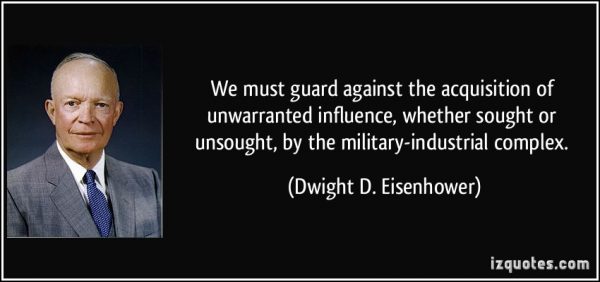
War is great for business. About $1.68 trillion worth of business globally as of 2015. Defence market reports say global tension and conflict will drive ongoing defence spending, “leading to global market opportunities for exporters”. Even here in NZ, our comparatively small defence budget is increasing, and NZ based military technology manufacturers are poised to capitalise on market opportunities generated by instability, superpower aggression and conflict around the world.

Already the NZ defence industry generates about $60million per annum, and employs about 2500 people. The defence force itself has the massive budget of $3,261 million for the 2017/18 year with an almost $100 million funding boost in this year’s budget, and an additional $406million over four years for increased operational expenses, and $576million for capital projects. That’s a lot of money in both public and private sector involvement in the potential creation and dissemination of instruments of death.

Business opportunities provided by a thriving arms market are promoted by the NZ Defence Industry Forum which held its annual conference in Wellington this week. The Defence Industry Forum (NZDIA) facilitates discussions between defence suppliers and defence agency buyers, from here and around the world. The NZDIA brief is to “identify niche markets worldwide and optimise foreign exchange returns on assets of its members, …with a focus on gaining and maximising onshore and offshore defence contracts”. According to one of the referees on their website, ‘they’re one of the most effective industry forums in New Zealand”, reflected in the Government’s budget increases perhaps. But beyond the opportunities of expanding domestic military expenditure, New Zealand companies are benefitting from the global death trade. With the military as agents of state sanctioned violence, companies supporting the arms trade here and abroad, are war profiteers, complicit in a culture of violence and oppression.

And it seems that industry is booming. The Defence Industry Association annual conference was attended by around 500 delegates and 150 organisations. The conference is usually sponsored at least in part, by one of the world’s largest (worst?) arms manufacturers, Lockheed Martin. Representatives of other major weapons companies also attend. But smaller domestic companies who manufacture mortar firing devices, combat training systems, missile guidance technology, weapons and ammunition, transport, procurement and logistics systems, cyber security and military electronics are all there. We’ve got ‘arms dealers on our doorstep’. It’s an opportunity for these industries to buy, sell and lobby for ‘more weapons of war’. War in itself helps their trade.

Intolerant conservatives in NZ were appalled at the behaviour of protestors who sought to blockade, interrupt and disrupt the Defence Industry conference. In online comments, protestors were called ‘street thugs’, ‘rent a mob’, ‘the dregs of society’. They should “get a job, get a life, and if they want change, they should get elected”. Ironically Chloe Swarbrick, newly elected Green MP attended the conference blockade, as did the recently awarded Nobel Peace Prize winner Thomas Nash, recognised for his opposition to nuclear weapons. And many of the protestors were working people who considered the issue of NZ’s involvement in the death trade sufficiently morally important that they used annual leave so they could attend.

Among the protestors was ‘Uncle Scam’ dressed in stars and stripes, wearing a ‘wanted for war crimes’ sign, and carrying another asking conference attendees ‘is it ok when it’s not your family?’ with pictures of falling bombs. There were clowns, men, women and children, people carrying flowers, and a celebratory ‘give peace a dance’ event.

Peaceful protestors blockading the route for delegates to the conference, were manhandled, apparently brutalised, and some people were insulted and injured by the police. Protestors say the police used inappropriate force, which the police deny, saying ‘they were extremely disappointed with the behaviour of protestors”, but protestors said if they’d acted the way the police did, they would have been arrested. The police have the long arm and the upper hand of the law.

Protestors questioned why the police were enforcing security at an industry event, which should be paying for its own security, and the cops were acting as ‘lap dogs to big business’. It’s a bizarre paradox; Wars have been fought to ‘preserve democratic freedoms’ which are suppressed by the police because those same freedoms are used to question the trades of war.

Some of the ‘appalling behaviour’ exhibited by protestors included spitting on conference delegates, and one online contributor suggested even ‘rebelling against the police is despicable behaviour’. It’s a sick world where war mongers and military equipment mercenaries are protected by the state, and those who bear witness and raise awareness of militarism, where the purpose is to kill, are condemned. Non-violent direct action is seen through this lens as a greater crime than direct and violent action through organised military means. In this context, even violent action would be appropriate to stop the dogs of war, but society condemns those who stand for peace, not force, as well as those who would use force to stop it.

Once again the power of the dollar trumps moral questions of the trade in murderous weapons. Turning a blind eye to the proliferation of the tools of war, and their production here in New Zealand, is the same as the American blind spot to gun related harm, but on bigger scale. Edmund Burke said, ‘all that is necessary for the triumph of evil is for good men to do nothing’. And Malcolm X said, ‘if you’re not careful, the newspapers will have you hating the people who are being oppressed, and loving the people who are doing the oppressing.” This week, righteous and honourable men and women spoke truth to power, and stood against evil that’s institutionalised in the state, and such a cultural norm that the non-violent protestors were condemned more than the purveyors of war.